

Air Canada: Customer Care Transformation (CCT)
My role: Design & Research Lead | Duration: 9 months
Project Overview
Air Canada is Canada’s largest airline, serving millions of domestic and international travellers. As part of its broader Customer Care Transformation (CCT) program, this initiative focused on modernizing how customers navigate high-friction service scenarios, particularly during disruptions.
Project highlights
✓ Successfully aligned with Air Canada’s business, technical, and design teams to integrate an AI chatbot that uses new design components that adhere to existing systems and guidelines
✓ Collected business requirements for all use cases identified by the airline and made informed design decisions based on this.
✓ Demonstrated the effectiveness of component-based conversational design over purely chat-driven interactions
✓ Validated designs through real-world usability testing scenarios
✓ Delivered structured, prioritized insights that directly informed product direction and MVP scope
The Problem Space
〰️
The Problem Space 〰️
The goal:
The project centred on designing an AI-assisted chatbot experience capable of supporting both simple inquiries and complex use cases, including:
Reimbursements and claims
Baggage issues
Booking changes and disruptions
Seat and cabin upgrades
Name corrections
The end product would aim to reduce friction, build trust, and enable confident self-service, while ensuring seamless escalation to human support when needed.
My responsibilities:
Led end-to-end synthesis of research, workshops, and usability findings into structured insights that directly shaped product direction
Defined core experience principles for AI-assisted customer support, including guidance, transparency, and trust-building
Acted as a key bridge between business stakeholders, designers, and operational teams, aligning user needs with system constraints
Drove problem framing and prioritization, distinguishing root causes from symptoms across claims and support journeys
Contributed to conversational experience design, including flow structure, escalation logic, and clarity in high-stress scenarios
Influenced the shift toward component-based conversational UI, improving scalability and usability over purely text-based flows
Supported usability testing synthesis and prioritization, translating observed behaviour into actionable product decisions
Preliminary user research revealed the following key insights.
-
In disruption scenarios (delays, lost baggage, reimbursements), users are not exploring, they are trying to resolve an issue quickly and confidently.
Testing revealed that:
Users preferred guided, structured flows over open-ended conversation
Ambiguity in responses reduced trust in the system
Clear next steps and confirmations were more valuable than conversational flexibility
This challenged the assumption that chatbots should feel “free-form,” reinforcing the need for structured conversational design.
-
Users consistently needed:
Clear explanations of why decisions were made (e.g., reimbursement eligibility)
Visible confirmation artifacts (receipts, summaries, next steps)
Confidence that their issue was being handled correctly
Without this, even well-designed interactions felt unreliable.oes here
-
Certain interactions—such as selecting flights, reviewing pricing, or confirming details—require visual structure.
We found that:
Users performed significantly better with component-based UI elements (cards, tables, seat maps)
Pure text interactions increased cognitive load and error rates
Hybrid experiences (chat + UI components) provided both flexibility and clarity
This led to a shift toward a component-driven conversational system.
-
Despite access to rich customer data, the experience did not adapt to the user.
There was:
No personalization or pre-filled data
No continuity across interactions
No recognition of returning users or existing claims
This increased effort and reduced perceived sophistication of the experience.
-
Generic updates and unclear messaging led users to:
Submit duplicate claims
Follow up unnecessarily
Lose trust in the system
The absence of meaningful status updates created a gap between system state and user understanding, increasing both frustration and operational load.
Gathering Business Requirements
This phase involved an extensive series of working sessions with Air Canada product owners, legal stakeholders, and operational teams to build a deep understanding of how claims and support processes function today, and what requirements must be met for successful submissions.
Across 100+ hours of collaborative sessions, my team and I gathered and synthesized input from multiple groups, each bringing different constraints, priorities, and interpretations of the five core use cases (including claims, baggage, and booking changes). This work required reconciling operational realities with regulatory and legal considerations, while identifying inconsistencies and gaps in how processes were defined and executed.
The outcome was a structured, cross-functional view of requirements that grounded the design in real-world constraints while highlighting opportunities to simplify and streamline the experience. You can explore how these requirements were captured and organized below.

Component Creation & Design System Integration
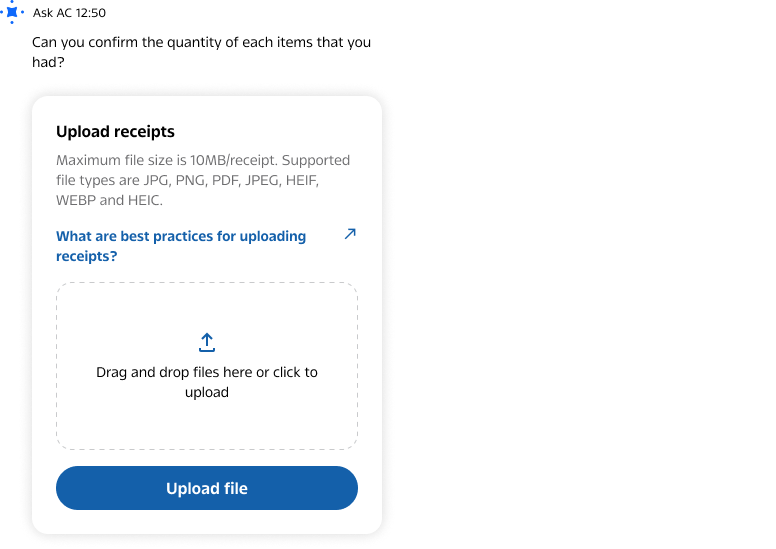
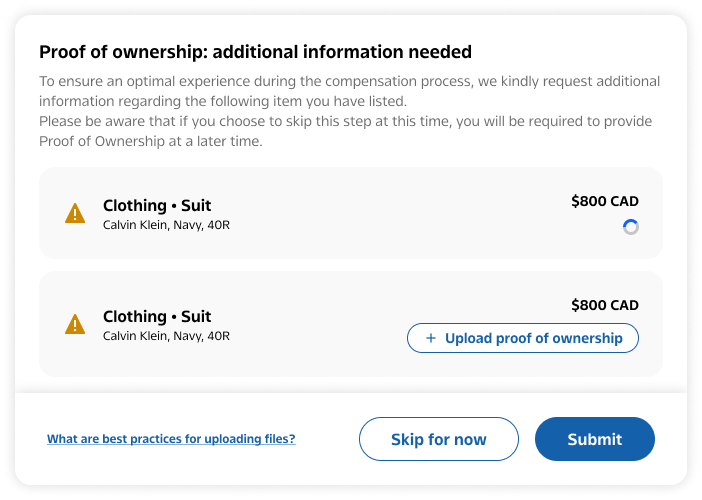
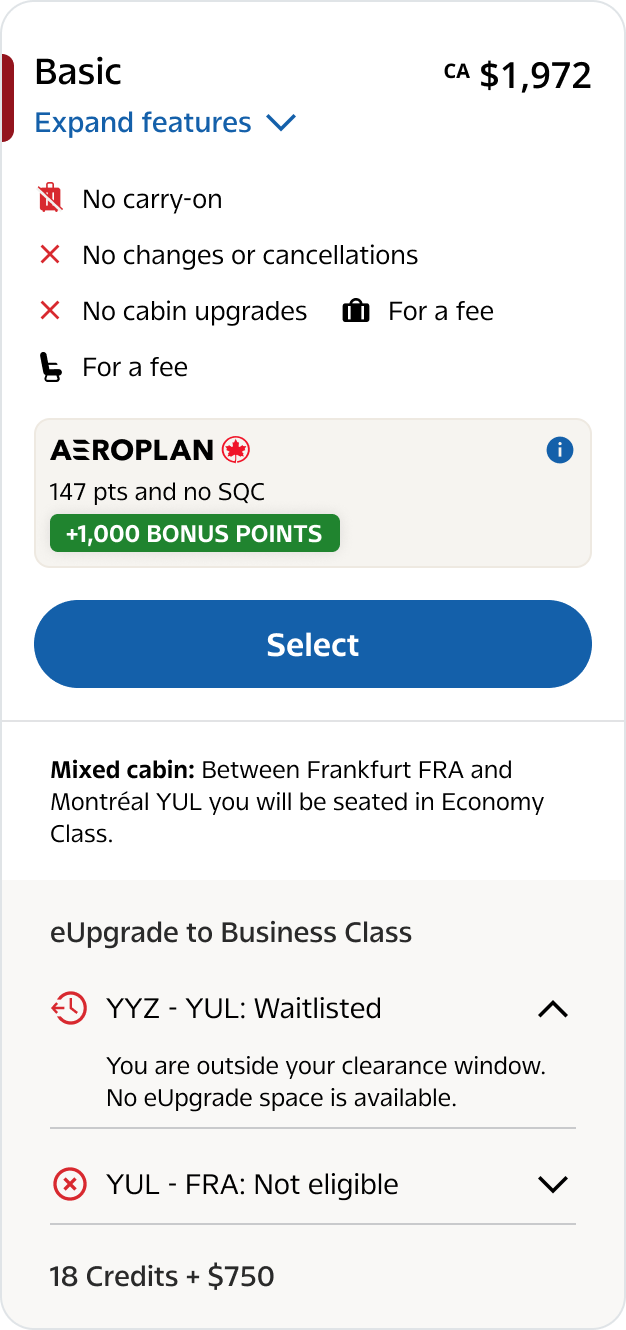
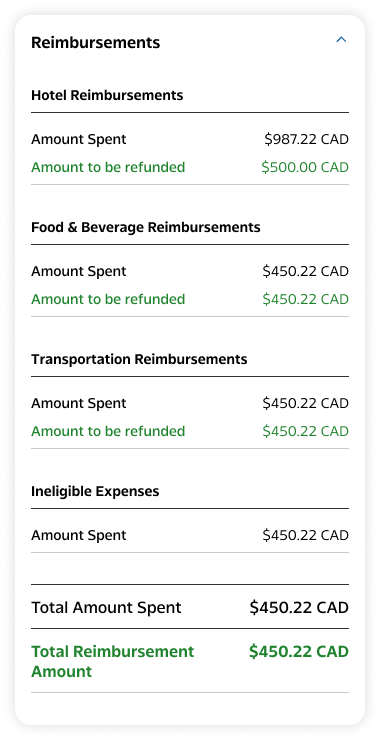
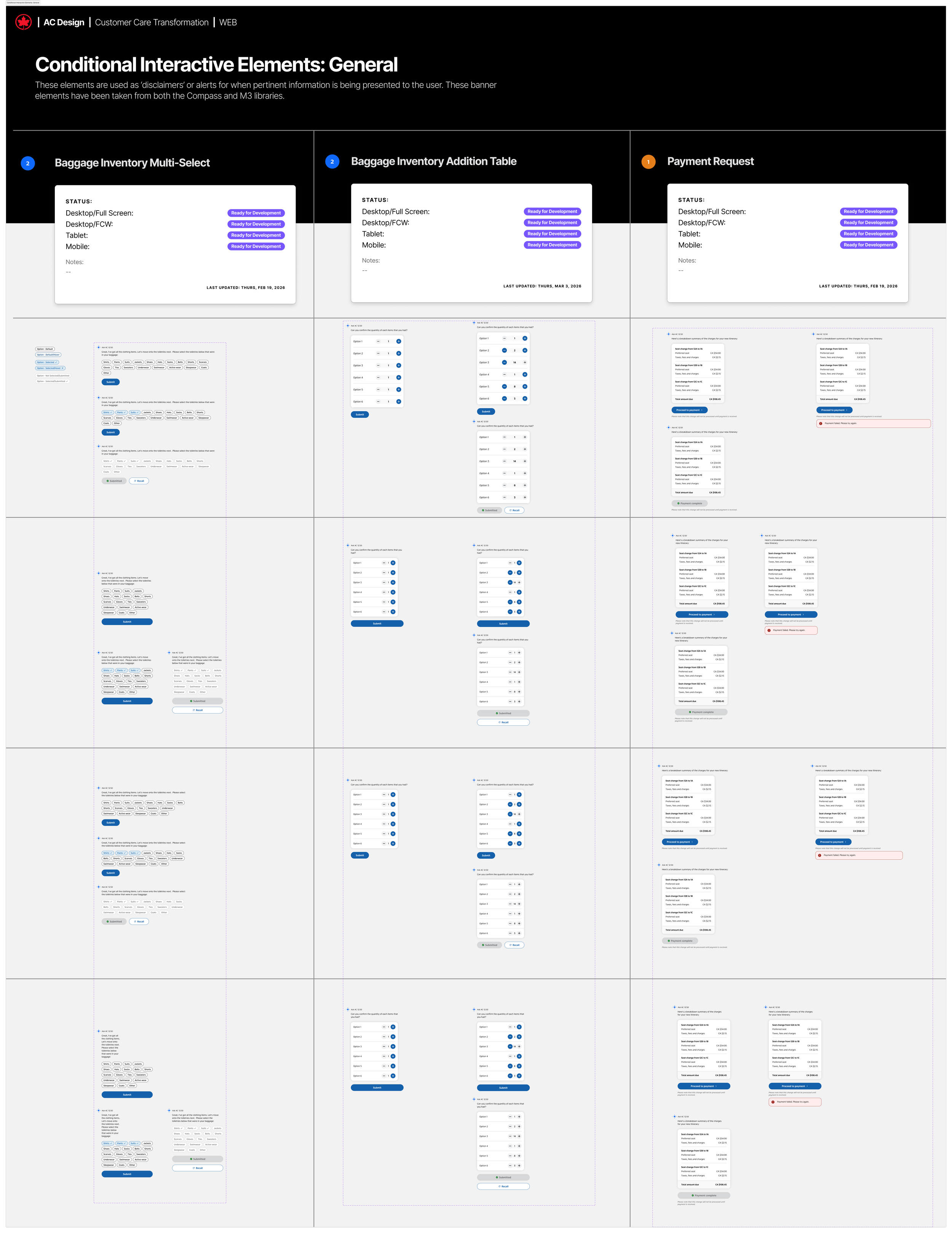
To support a scalable and consistent experience, we developed a set of reusable conversational and interface components tailored to the needs of AI-assisted customer support. This included defining the chatbot’s tone and manner, establishing conversational design principles, and creating structured UI elements such as cards, carousels, and confirmation patterns within Figma.
This system became the foundation for building cohesive, repeatable experiences across multiple use cases. You can review an example of these components and guidelines below.
Usability Testing Prototypes & Findings
Design concepts were developed iteratively and validated through realistic, scenario-based usability testing. We built interactive prototypes covering high-priority use cases such as reimbursements, baggage claims, and booking changes, and tested them through 15 in-person sessions conducted in Montreal, with a mix of English and French-speaking participants.
Observing how users navigated these high-stress scenarios provided critical insight into where clarity, trust, and guidance were breaking down. These findings were continuously fed back into the design process, allowing us to refine flows, improve communication patterns, and strengthen decision-making support. The result was a set of validated, user-informed design directions grounded in real behaviour rather than assumptions.
*Prototypes are best experienced full-screen.
*Please note that parts of this presentation were redacted for confidentiality reasons.
Key Takeaways
-

Align Early and Often
Introducing new interaction patterns, especially in AI and conversational design, requires strong early alignment across stakeholders to avoid downstream friction and rework.
-

Lock Core Patterns Before Scaling
Establishing and agreeing on foundational design components early helps prevent unnecessary iteration during development and keeps teams moving efficiently.
-

Design and Development Must Move in Sync
Starting development before designs are fully matured creates avoidable back-and-forth; tighter coordination ensures smoother execution for both teams.
-

Structure Enables Speed
Investing time upfront to define clear systems, components, and principles ultimately accelerates delivery and leads to more consistent, scalable outcomes.